
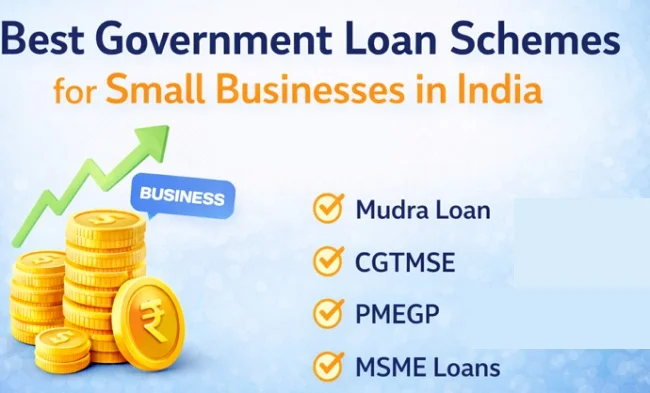
Starting a small business in India is exciting, but arranging money is often the biggest challenge. Whether it’s a grocery shop, tailoring unit, food stall, online business, or manufacturing setup, most entrepreneurs need financial support at some stage.
The good news is that the Indian government offers several loan schemes specially designed for small businesses, startups, women entrepreneurs, and MSMEs. These schemes provide lower interest rates, easier eligibility, collateral-free loans, and government support that private loans often do not offer.
If you are planning to start or expand a business in 2026, this guide will help you understand the best government loan schemes available in India and how to choose the right one.
Why Government Loan Schemes Matter for Small Businesses
Many small business owners struggle because:
- Banks ask for collateral
- Interest rates are high
- Approval processes are complicated
- New businesses lack credit history
Government-backed schemes solve many of these problems by supporting entrepreneurs through subsidies, guarantees, and affordable financing.
For example, a small tea shop owner in Delhi may not get a large private business loan easily. But under schemes like Mudra Loan or CGTMSE, getting funding becomes much easier.
Best Government Loan Schemes for Small Business in India (2026)
1. Pradhan Mantri Mudra Yojana (PMMY)
The Mudra Loan Scheme remains one of the most popular government business loan schemes in India.
It is specially designed for:
- Small shop owners
- Street vendors
- Service businesses
- Home-based businesses
- Small manufacturers
Loan Categories Under Mudra
| Category | Loan Amount |
| Shishu | Up to ₹50,000 |
| Kishor | ₹50,000 to ₹5 lakh |
| Tarun | ₹5 lakh to ₹10 lakh |
Key Benefits
- No collateral required
- Low processing charges
- Available through banks and NBFCs
- Suitable for first-time entrepreneurs
Who Should Choose This
- Small startup owners
- Kirana stores
- Freelancers
- Local service providers
- Mobile repair or tailoring shops
2. Stand-Up India Scheme
This scheme promotes entrepreneurship among women and SC/ST business owners.
Loan Amount
₹10 lakh to ₹1 crore
Best For
- Manufacturing businesses
- Trading businesses
- Service sector startups
Key Features
- Supports greenfield projects
- Helps women entrepreneurs
- Includes working capital support
Example
A woman planning to start a beauty salon chain or boutique manufacturing unit can use this scheme for funding.
3. CGTMSE Loan Scheme
CGTMSE stands for Credit Guarantee Fund Trust for Micro and Small Enterprises.
This scheme helps businesses get collateral-free loans.
Key Benefits
- No need for property security
- Government provides guarantee cover to banks
- Easier loan approvals
Maximum Loan
Up to ₹5 crore (depending on lender rules)
Suitable For
- Existing MSMEs
- Expanding businesses
- Manufacturing units
4. PMEGP (Prime Minister Employment Generation Programme)
PMEGP is ideal for people who want to start a new business in villages or cities.
It is managed by:
- KVIC
- District Industries Centres
- Khadi institutions
Subsidy Benefits
| Area | Subsidy |
| Urban | 15% to 25% |
| Rural | 25% to 35% |
Business Types Allowed
- Manufacturing
- Food processing
- Handicrafts
- Rural businesses
Major Advantage
You get subsidy support from the government, reducing your repayment burden.
5. SIDBI MSME Loans
The Small Industries Development Bank of India (SIDBI) supports MSMEs with various financing programs.
Best For
- Growth-stage businesses
- Equipment purchase
- Technology upgrades
Key Features
- Competitive interest rates
- MSME-focused products
- Startup-friendly programs
Popular SIDBI Schemes
- SMILE Scheme
- Make in India Soft Loan Fund
- Equipment Finance
6. National Small Industries Corporation (NSIC) Subsidy Schemes
NSIC supports small businesses with financing and raw material assistance.
Benefits
- Raw material support
- Marketing support
- Credit facilitation
- Government tender assistance
Suitable For
- Manufacturing businesses
- Small factories
- Export-oriented units
Comparison Table of Top Government Business Loan Schemes
| Scheme | Loan Amount | Collateral | Best For |
| Mudra Loan | Up to ₹10 lakh | No | Small businesses |
| Stand-Up India | ₹10 lakh–₹1 crore | Sometimes required | Women & SC/ST entrepreneurs |
| CGTMSE | Up to ₹5 crore | No | MSMEs |
| PMEGP | Subsidy-based | Depends | New businesses |
| SIDBI Loans | Varies | Depends | Expanding MSMEs |
| NSIC Support | Varies | Depends | Manufacturing businesses |
Key Features and Benefits of Government Business Loans
Major Advantages
- Lower interest rates
- Easier eligibility
- Government-backed security
- Collateral-free options
- Subsidy support
- Flexible repayment tenure
- Support for women entrepreneurs
- Encouragement for rural businesses
Step-by-Step Process to Apply for Government Business Loans
Step 1: Identify the Right Scheme
Choose based on:
- Business size
- Funding requirement
- Industry type
- New or existing business
Step 2: Prepare Your Business Plan
Include:
- Business idea
- Investment details
- Expected income
- Market analysis
Step 3: Collect Required Documents
Keep all documents ready before applying.
Step 4: Apply Through Bank or Portal
You can apply through:
- Public sector banks
- NBFCs
- Official government portals
- MSME support centers
Step 5: Verification and Approval
Banks may verify:
- Credit score
- Business feasibility
- Identity and address
Step 6: Loan Disbursement
After approval, the amount is transferred to your bank account.
Eligibility Criteria for Government Business Loans
Eligibility may differ scheme-wise, but common requirements include:
- Indian citizen
- Age usually between 18–65 years
- Business plan required
- MSME registration (in some cases)
- Good repayment capacity
Documents Required
Common Documents
- Aadhaar Card
- PAN Card
- Address proof
- Business proof
- Bank statements
- Passport-size photographs
- Income proof
- GST registration (if applicable)
Additional Documents
For larger loans, banks may ask for:
- Project report
- ITR filings
- Balance sheets
- Udyam registration
Interest Rates and Charges in 2026
| Loan Scheme | Approx Interest Rate |
| Mudra Loan | 8%–12% |
| Stand-Up India | 7%–11% |
| SIDBI Loans | 8%–13% |
| MSME Loans | 9%–14% |
Other Charges
- Processing fee
- Documentation charges
- Insurance charges
- GST on fees
Some schemes offer reduced charges for women entrepreneurs.
Pros and Cons of Government Loan Schemes
Pros
- Affordable financing
- Support for startups
- Collateral-free options
- Government guarantee support
- Better accessibility in rural areas
Cons
- Approval can take time
- Documentation may be lengthy
- Subsidy release sometimes delayed
- Banks may still assess repayment risk strictly
Common Mistakes to Avoid
Applying Without a Business Plan
Banks reject many applications due to poor planning.
Ignoring Credit Score
Even government-backed loans may check your credit history.
Choosing the Wrong Scheme
Not every loan is suitable for every business.
Incomplete Documentation
Missing papers delay approval.
Borrowing More Than Needed
Higher EMI can hurt cash flow.
Expert Tips to Improve Loan Approval Chances
- Maintain a good CIBIL score
- Open a current account for business
- Register under Udyam MSME portal
- Keep GST and bank records updated
- Start with smaller loans if you are new
- Prepare realistic income projections
Latest Updates and Trends in India (2026)
Digital Loan Processing Growing Fast
Most banks now offer online MSME loan applications with faster approvals.
AI-Based Credit Evaluation
Many lenders now assess loan eligibility using digital transactions and GST data.
Focus on Women Entrepreneurs
Government support for women-led businesses has increased in 2026 through subsidies and special loan programs.
Green and Sustainable Businesses Getting Preference
Businesses related to eco-friendly products, recycling, solar energy, and sustainable manufacturing are receiving better funding support.
Who Should Choose Government Business Loans?
Government schemes are ideal for:
- First-time entrepreneurs
- Small shop owners
- Women business owners
- Rural businesses
- Manufacturing startups
- Service businesses
- MSMEs seeking expansion
Best Government Loan Options Based on Business Type
| Business Type | Recommended Scheme |
| Small shop | Mudra Loan |
| Women startup | Stand-Up India |
| Manufacturing unit | CGTMSE |
| Rural business | PMEGP |
| Expansion funding | SIDBI |
| Factory setup | NSIC Support |
FAQs About Government Loan Schemes for Small Business
Q: Which is the best government loan scheme for small businesses in India?
A: Mudra Loan is one of the best options for small businesses because it offers collateral-free loans up to ₹10 lakh.
Q: Can I get a government business loan without collateral?
A: Yes, schemes like Mudra Loan and CGTMSE provide collateral-free funding options.
Q: What is the minimum CIBIL score required?
A: Most banks prefer a score above 650, although requirements may vary.
Q: Are government business loans available for startups?
A: Yes, many schemes support startups, especially Mudra, Stand-Up India, and PMEGP.
Q: How long does approval take?
A: Depending on the scheme and lender, approval can take from a few days to several weeks.
Q: Can women entrepreneurs get special benefits?
A: Yes, many schemes provide lower interest rates and easier eligibility for women business owners.
Conclusion
Government loan schemes have become a major support system for small businesses in India. Whether you are opening a small shop, launching a startup, buying machinery, or expanding operations, there are multiple funding options available in 2026.
The key is choosing the right scheme based on your business needs and preparing your application properly. A strong business plan, clean documentation, and good financial discipline can significantly improve your chances of approval.
Before applying, compare loan terms carefully and avoid borrowing beyond your repayment capacity. When used wisely, government-backed business loans can help turn a small business idea into a successful long-term venture.