
Checking a court case status no longer always requires visiting the court personally. In India, many court cases can be tracked online using details such as the CNR number, case number, party name, advocate name or FIR number. Online case status services can help you find the latest available information about a case, including hearing dates, case history, case stage and orders.
Whether you are a party to a case, a family member, a lawyer or someone who needs basic information about a court proceeding, knowing how to check case status online can save time and effort.
What Is Court Case Status?
Court case status refers to the current position of a case in the judicial process.
Depending on the case, online records may show information such as:
- Case number
- Filing details
- Names of parties
- Name of the court
- Advocate details
- Case status
- Next hearing date
- Previous hearing history
- Orders or judgments
- Case stage
- Disposal details, where applicable
The information available can vary depending on the court and type of case.
What Is a CNR Number?
A CNR number is one of the easiest ways to find the status of many cases handled through the eCourts system.
CNR stands for Case Number Record. It is a unique alphanumeric identification number associated with a case in the court system.
If you already have the CNR number, you generally do not need to search using the party’s name or other details.
How to Check Court Case Status Using a CNR Number
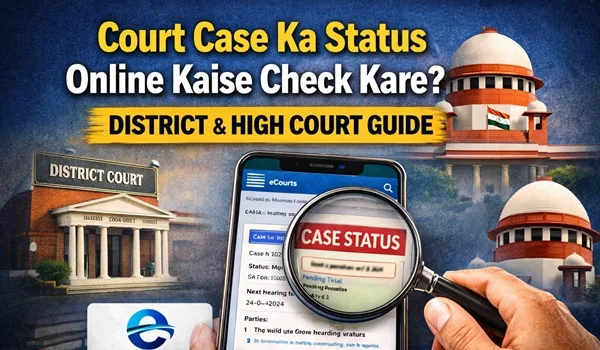
If you have the CNR number, the process is relatively simple.
Step One: Open the eCourts Case Status Service
Use the official eCourts case status service through a computer or mobile device.
Choose the option for checking case status using the CNR number.
Step Two: Enter the CNR Number
Enter the complete CNR number carefully.
Avoid adding unnecessary spaces or symbols. A typing mistake can result in the system not finding the case.
Step Three: Enter the Captcha
Enter the characters shown in the security verification box.
Step Four: Search for the Case
Submit the details to search for the case.
If the information matches the court record, the available case details will be displayed.
Step Five: Check the Case History
After opening the case record, you may be able to see the case history, current status, hearing information and other available details.
How to Check Case Status Without a CNR Number
Do not worry if you do not have the CNR number.
Depending on the court and available online services, you may be able to search using other information.
Common search options include:
- Case number
- Filing number
- Party name
- Advocate name
- FIR number
- Act and section
- Case type
The exact search options can differ between district courts and High Courts.
How to Search a Case by Case Number
If you know the case number, you can generally search for it through the case status section.
You may need to enter:
- Case type
- Case registration number
- Registration year
- Captcha
After submitting the information, matching cases can be displayed.
You can then select the relevant case to view its available history and status.
How to Search a Case by Party Name
Party-name search is useful when you do not know the case number.
The party can be a:
- Plaintiff
- Defendant
- Petitioner
- Respondent
- Complainant
- Accused
- Appellant
- Other party connected with the case
Usually, you need to select the relevant court details, enter the party name and registration year, and then search.
It is useful to enter the name carefully because common names may produce several results.
How to Check Case Status Using an FIR Number
Some criminal cases can be searched using FIR-related information.
Depending on the available court system, you may need to enter:
- Police station
- FIR number
- FIR year
- Case status category
- Captcha
This can help identify the court case associated with the FIR when the case has been registered in the court system.
How to Search a Case by Advocate Name
Some court services also provide an option to search cases associated with an advocate.
You may be able to search using:
- Advocate name
- Bar registration number
- Relevant court details
- Case status
- Cause list date
This can be useful for advocates and parties who want to identify cases connected with a particular lawyer.
How to Check the Next Hearing Date
Once you locate the correct case, look at the case history or case details.
The available record may show the next date fixed by the court.
However, do not rely only on an old screenshot or previously downloaded case information. Court dates can change, and online data may not always update immediately.
For an important hearing, it is sensible to confirm the date with your advocate or the concerned court.
What Does “Pending” Mean?
When a case is shown as pending, it generally means the case has not yet been finally disposed of.
A pending case may be at different stages, such as:
- Filing
- Admission
- Notice
- Evidence
- Arguments
- Judgment
- Further proceedings
The word “pending” alone does not explain exactly what happened during the latest hearing. You should check the case history and available orders for more information.
What Does “Disposed” Mean?
A case marked disposed generally means the court has completed the proceeding in that case.
However, disposal can happen for different reasons. For example, a case may be decided after hearing the parties, settled, withdrawn or disposed of for another procedural reason.
Therefore, if you see “disposed”, check the final order or case details to understand how the case was concluded.
How to Check Court Orders Online
In many cases, court orders and judgments may also be available through online court services.
Depending on the court, you may be able to search using:
- Case number
- Party name
- Court number
- Order date
- Other available case details
If an order is available online, read the complete document carefully rather than relying only on the case-status summary.
How to Check a High Court Case
High Court cases can generally be checked through the respective High Court’s online case services.
The search may require you to first select the High Court and relevant bench.
Depending on the system, you may then search using:
- CNR number
- Case number
- Party name
- Filing number
- Advocate name
- FIR number
- Act
- Case type
The exact procedure can vary from one High Court to another.
How to Check a District Court Case
District and subordinate court cases can commonly be searched through the eCourts case status system.
You may need to select the relevant:
- State
- District
- Court complex
- Establishment
After selecting the appropriate court, you can use the available search method to find the case.
What Information Should You Keep Ready?
Before searching for a case, try to keep as much information as possible.
Useful details include:
- CNR number
- Case number
- Case registration year
- Filing number
- Names of parties
- Advocate name
- FIR number
- Police station
- Court name
Having accurate information makes the search much easier.
What If the Case Is Not Showing Online?
Sometimes a case may not appear in the search results.
Possible reasons include:
- Incorrect case number
- Wrong registration year
- Incorrect spelling of a party name
- Wrong court selected
- Case data not yet updated
- Case not available in the particular online system
- Technical problem with the website
- Case record being maintained through another court system
Try checking the information again before assuming that the case does not exist.
Can Court Case Status Be Checked on a Mobile Phone?
Yes. Court case information can also be accessed through mobile devices.
The eCourts system provides mobile-based services through its official application and related services. Users can search cases using available details such as the CNR number and other search criteria.
A mobile phone can therefore be useful when you want to check a case while travelling or when you cannot access a computer.
Can You Check Court Case Status Through SMS?
The eCourts system has also provided an SMS-based facility for checking case information using the CNR number.
This can be useful for people who have limited internet access.
However, users should enter the CNR number correctly and follow the currently applicable SMS instructions.
Important Things to Remember
Online court records are useful, but they should be treated carefully.
Keep these points in mind:
- Check that you have selected the correct court.
- Enter the case number and year accurately.
- Check the latest available hearing information.
- Read orders instead of relying only on status labels.
- Keep your advocate informed about important dates.
- Do not assume that online information is updated instantly.
- For urgent legal matters, verify important information with the concerned court or your lawyer.
Is Online Court Status Legally Final?
Online case-status information is mainly intended to provide convenient access to court information.
It should not automatically be treated as a substitute for certified court records or official legal documents.
If you need an order or judgment for an official purpose, you may need to obtain the appropriate certified copy according to the applicable court procedure.
Final Thoughts
Checking the status of a court case online in India is much easier when you have the right information. A CNR number is often the most convenient way to locate a case, but searches may also be possible using a case number, party name, advocate name, FIR number or other details.
Once you find the correct case, check the case history, current status, next hearing date and available orders carefully. If the matter is legally important or involves an urgent hearing, always verify critical information with your advocate or the concerned court.
Online case tracking is a useful tool for saving time, staying informed and following the progress of a court case without making unnecessary visits to the court.