
Imagine rushing a family member to the hospital during an emergency and worrying more about arranging money than the treatment itself. This is exactly why cashless health insurance has become so important in India.
Today, medical costs in cities like Delhi, Mumbai, Bengaluru, and Hyderabad can easily cross ₹2 lakh to ₹5 lakh for even moderate treatments. A cashless health insurance facility helps policyholders get treated without paying huge amounts upfront at the hospital.
But many people still get confused about network hospitals, claim approvals, cashless cards, and hidden conditions. Some even assume every hospital supports cashless treatment, which is not true.
In this detailed guide, we will explain how cashless health insurance hospitals work in India, their benefits, eligibility, documents required, latest 2026 trends, and smart tips to avoid claim rejection.
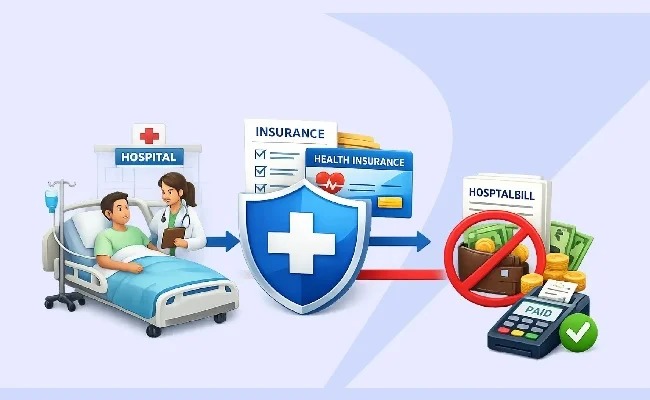
What Are Cashless Health Insurance Hospitals?
Cashless health insurance hospitals are hospitals that have a tie-up with your insurance company or Third-Party Administrator (TPA). These hospitals are called network hospitals.
If you get admitted to a network hospital, the insurance company directly settles the medical bill with the hospital according to your policy coverage. You only pay for:
- Non-covered expenses
- Consumables not included in the policy
- Co-payment amount (if applicable)
- Expenses beyond policy limits
This reduces financial stress during emergencies.
How Cashless Health Insurance Works in India
Here’s a simple flow:
| Step | Process |
| 1 | Choose a network hospital |
| 2 | Show health insurance card and ID |
| 3 | Hospital sends pre-authorization request |
| 4 | Insurance company verifies policy |
| 5 | Claim gets approved |
| 6 | Treatment starts |
| 7 | Insurance company settles eligible bill directly |
Types of Cashless Claims
- Planned Hospitalization
This applies when treatment is scheduled in advance, such as:
- Cataract surgery
- Knee replacement
- Hernia operation
- Maternity treatment
You usually need to inform the insurer 48–72 hours before admission.
- Emergency Hospitalization
Used during sudden situations like:
- Accidents
- Heart attack
- Food poisoning
- Sudden illness
In emergencies, insurers generally require notification within 24 hours of admission.
Key Features and Benefits of Cashless Health Insurance Hospitals
Major Benefits
- No need to arrange large cash during emergencies
- Faster treatment process
- Direct settlement between hospital and insurer
- Reduced financial burden on families
- Access to quality hospitals across India
- Useful for senior citizens and families
- Available in most metro and Tier-2 cities
- Digital claim approval in many hospitals
- 24×7 support from insurers and TPAs
Difference Between Cashless and Reimbursement Claims
| Feature | Cashless Claim | Reimbursement Claim |
| Payment | Insurer pays hospital directly | You pay first |
| Hospital Requirement | Must be network hospital | Any hospital |
| Financial Burden | Low | High initially |
| Claim Speed | Faster | Usually slower |
| Documentation | Moderate | More paperwork |
| Convenience | Very high | Medium |
Step-by-Step Process for Cashless Hospitalization
Step 1: Check Network Hospital
Visit your insurer’s website or mobile app and search for nearby network hospitals.
Popular insurers in India include:
- HDFC ERGO
- ICICI Lombard
- Niva Bupa
- Star Health
- Care Health Insurance
- Aditya Birla Health Insurance
Step 2: Carry Essential Documents
Take:
- Health insurance card
- Aadhaar card or PAN card
- Doctor’s prescription
- Policy details
Step 3: Fill Pre-Authorization Form
The hospital insurance desk helps you complete this form.
The insurer reviews:
- Policy validity
- Waiting period
- Disease coverage
- Sum insured balance
Step 4: Approval from Insurance Company
Approval may take:
| Situation | Approximate Time |
| Emergency | 30 minutes to 6 hours |
| Planned Treatment | 2 to 24 hours |
Step 5: Treatment and Discharge
After treatment:
- Hospital sends final bill
- Insurer settles approved amount
- Patient pays non-covered charges
Eligibility for Cashless Health Insurance
Most policyholders are eligible if:
- Policy is active
- Premium is paid
- Treatment is covered
- Waiting period is completed
- Hospital is in insurer network
Documents Required
Basic Documents
- Health insurance policy card
- Aadhaar card
- PAN card
- Doctor consultation papers
- Admission note
- Medical reports
- Pharmacy bills (if required)
For Planned Surgery
- Pre-authorization form
- Investigation reports
- Doctor recommendation
Charges and Costs Involved
Cashless treatment does not always mean completely free treatment.
Here are possible out-of-pocket expenses:
| Expense Type | Covered? |
| Room rent within limit | Yes |
| ICU charges | Yes |
| Surgery cost | Yes |
| Registration charges | Usually No |
| Gloves, PPE kits | Sometimes No |
| Food for attendants | No |
| Non-medical items | No |
Average Health Insurance Premiums in India (2026)
| Family Type | Approx Annual Premium |
| Individual (Age 25–35) | ₹8,000 – ₹18,000 |
| Couple | ₹15,000 – ₹30,000 |
| Family Floater | ₹18,000 – ₹45,000 |
| Senior Citizen | ₹30,000 – ₹85,000 |
Premium depends on:
- Age
- City
- Medical history
- Sum insured
- Add-ons selected
Best Cashless Health Insurance Options in India (2026)
| Insurance Company | Network Hospitals | Popular Feature |
| Star Health | 14,000+ | Strong hospital network |
| Niva Bupa | 10,000+ | Fast claim settlement |
| HDFC ERGO | 13,000+ | Digital claim support |
| ICICI Lombard | 9,500+ | Good metro coverage |
| Care Health | 11,000+ | High sum insured options |
Network counts may change periodically based on insurer partnerships.
Who Should Choose Cashless Health Insurance?
Cashless plans are especially useful for:
- Families with children
- Senior citizens
- Salaried employees
- Self-employed individuals
- People living in metro cities
- Individuals with lifestyle diseases
- Frequent travelers within India
Pros and Cons
Pros
- Immediate treatment without arranging cash
- Better emergency support
- Less paperwork
- Faster hospital discharge
- Peace of mind during medical emergencies
Cons
- Limited to network hospitals
- Some expenses remain uncovered
- Approval delays may happen
- Policy exclusions still apply
- Certain diseases have waiting periods
Common Mistakes to Avoid
- Not Checking Network Hospitals
Many people assume every hospital supports cashless claims.
Always verify before admission.
- Ignoring Waiting Periods
Diseases like diabetes, hernia, or thyroid-related conditions may have waiting periods.
- Choosing Low Coverage
A ₹3 lakh cover may not be enough in metro cities in 2026.
Experts now recommend at least:
- ₹10 lakh for families
- ₹5 lakh minimum for individuals
- Delaying Claim Intimation
Late notification can complicate approval.
- Hiding Medical History
Incorrect information may lead to claim rejection later.
Expert Tips for Better Cashless Claim Experience
Choose Insurers with Large Hospital Networks
A wider network means easier access during emergencies.
Prefer Policies with High Claim Settlement Ratio
This improves chances of smoother approvals.
Use Insurer Mobile Apps
Most insurers now offer:
- Digital e-cards
- Claim tracking
- Hospital search
- Paperless approval
Keep Soft Copies of Documents
Store policy papers in:
- Google Drive
- Mobile phone
This helps during emergencies.
Latest Trends in Cashless Health Insurance in India (2026)
- 100% Digital Claim Processing
Many insurers now approve claims digitally within hours.
- AI-Based Fraud Detection
Insurance companies are increasingly using AI systems to detect fake claims.
- OPD and Wellness Integration
Modern policies include:
- Online doctor consultation
- Pharmacy discounts
- Annual health checkups
- Fitness rewards
- Cashless Anywhere Facility
Several insurers now allow cashless treatment even in non-network hospitals through temporary approvals.
This trend is growing rapidly in 2026.
FAQs About Cashless Health Insurance Hospitals
Q: What is a network hospital in health insurance?
A: A network hospital is a hospital tied up with your insurer where you can avail cashless treatment.
Q: Is cashless treatment completely free?
A: No. Non-covered items and policy exclusions may still need payment by the patient.
Q: Can I get cashless treatment in any hospital?
A: Usually only in network hospitals, although some insurers now offer “Cashless Anywhere” services.
Q: How long does cashless claim approval take?
A: Emergency approvals may happen within a few hours, while planned treatments may take up to 24 hours.
Q: What happens if my cashless claim gets rejected?
A: You may pay the hospital bill first and later apply for reimbursement if eligible.
Q: Which health insurance company has the largest hospital network in India?
A: Companies like Star Health, HDFC ERGO, and Care Health currently have very large hospital networks.
Q: Is Aadhaar mandatory for cashless hospitalization?
A: Most hospitals ask for Aadhaar or another valid government ID for verification.
Conclusion
Cashless health insurance hospitals have transformed healthcare access in India. Instead of worrying about arranging lakhs of rupees during emergencies, families can focus on treatment and recovery.
However, simply buying a policy is not enough. You should carefully check:
- Network hospitals
- Claim settlement process
- Waiting periods
- Coverage limits
- Exclusions
For most Indian families in 2026, a good cashless health insurance policy is no longer optional — it is an essential financial safety net.
Before buying any plan, compare at least 3–4 insurers, read the policy wording carefully, and choose adequate coverage based on your city and family needs.