
A single hospital bill in India can wipe out years of savings. Whether it’s a dengue admission, a sudden surgery, or a medical emergency involving parents or children, healthcare costs are rising fast in cities as well as smaller towns.
That’s why family health insurance is no longer optional in 2026. It has become a basic financial safety net for middle-class Indian families.
Instead of buying separate policies for every family member, many people now prefer a family floater health insurance plan. One policy covers the entire family, premiums are usually lower, and claim management becomes easier.
But with so many insurance companies offering different features, choosing the right plan can feel confusing.
This guide will help you understand:
- Which family health insurance plans are best in India
- What features matter most
- Premium costs in 2026
- Common mistakes buyers make
- Expert tips before purchasing a policy
Let’s simplify everything step by step.
What is a Family Health Insurance Plan?
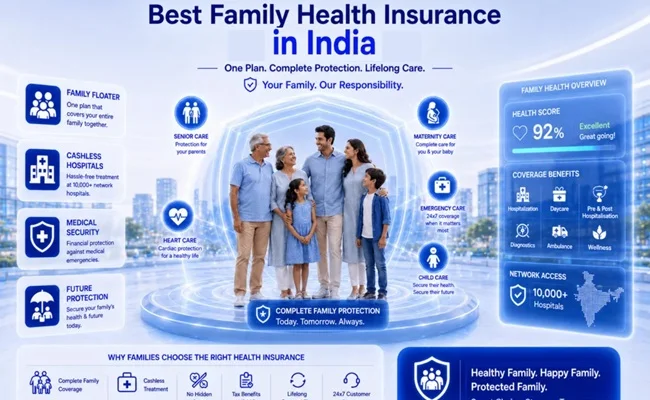
A family health insurance plan, also called a family floater plan, provides medical coverage for multiple family members under one sum insured.
Typically, the plan can cover:
- Husband and wife
- Children
- Parents (in some plans)
- In-laws (depending on insurer)
Instead of separate coverage amounts for each person, the entire family shares the total insured amount.
Example
If your family floater policy has ₹10 lakh coverage:
- Your child’s hospitalization can use ₹2 lakh
- Remaining ₹8 lakh stays available for the family
This makes family plans affordable and practical for Indian households.
Best Health Insurance Plans in India for Family (2026)
Comparison Table
| Insurance Plan | Starting Premium (Approx.) | Sum Insured Options | Best For | Key Highlight |
| HDFC ERGO Optima Secure | ₹15,000/year | ₹5 lakh – ₹2 crore | Urban families | Coverage multiplier benefits |
| Niva Bupa ReAssure 2.0 | ₹14,500/year | ₹5 lakh – ₹1 crore | Families with kids | Unlimited restore feature |
| Care Supreme | ₹13,000/year | ₹5 lakh – ₹1 crore | Budget-conscious buyers | High no-claim bonus |
| Star Health Family Optima | ₹12,500/year | ₹3 lakh – ₹25 lakh | Small families | Good hospital network |
| ICICI Lombard Elevate | ₹16,000/year | ₹5 lakh – ₹3 crore | High-income families | Modern digital claim process |
| Aditya Birla Activ One | ₹14,000/year | ₹5 lakh – ₹2 crore | Comprehensive coverage | Chronic care support |
Premiums may vary based on age, city, health condition, and number of family members.
Best Options in India (Detailed Review)
1. HDFC ERGO Optima Secure
Why Many Indian Families Prefer It
This plan is popular because of its “Secure Benefit,” where the insured amount increases without proportional premium increases.
Key Features
- Automatic sum insured increase
- Large hospital network
- Daycare treatment coverage
- Cashless hospitalization
- Annual health check-up
Who Should Choose This?
- Salaried families
- Metro city residents
- Families wanting higher protection
2. Niva Bupa ReAssure 2.0
One of the strongest family floater plans in terms of restoration benefits.
Key Benefits
- Unlimited reinstatement of coverage
- Fast claim settlement
- Modern app-based policy handling
- Coverage for modern treatments
Best For
- Young families
- Families with children
- People wanting long-term health coverage
3. Care Supreme
A good balance between affordability and benefits.
Highlights
- High no-claim bonus
- Affordable premiums
- Annual health checkups
- Air ambulance support
Best For
- Middle-class families
- First-time insurance buyers
4.Star Health Family Optima
One of India’s most recognized retail health insurance products.
Features
- Easy renewals
- Good hospital presence in Tier-2 and Tier-3 cities
- Maternity options available
- Coverage for newborn babies
Best For
- Families living outside metro cities
- Traditional insurance buyers
Key Features to Look for in Family Health Insurance
Before purchasing any plan, always compare these important features.
Essential Features Checklist
- High sum insured (minimum ₹10 lakh recommended in 2026)
- Cashless hospital network
- Pre and post-hospitalization coverage
- Daycare procedures
- Ambulance charges
- Annual health checkup
- No-claim bonus
- Restoration benefits
- Coverage for modern treatments
- Room rent flexibility
Step-by-Step Guide to Choose the Right Family Health Insurance Plan
Step 1: Calculate Required Coverage
In 2026, a ₹5 lakh cover may not be enough for urban families.
Recommended Coverage
| Family Type | Suggested Coverage |
| Couple | ₹10 lakh |
| Couple + 1 child | ₹10–15 lakh |
| Family with parents | ₹20 lakh+ |
Step 2: Compare Waiting Periods
Look for:
- Pre-existing disease waiting period
- Maternity waiting period
- Specific illness waiting period
Shorter waiting periods are better.
Step 3: Check Hospital Network
Choose insurers with strong cashless hospital networks in your city.
This becomes extremely important during emergencies.
Step 4: Compare Claim Settlement Ratio
A higher claim settlement ratio generally indicates smoother claim handling.
Step 5: Read Policy Exclusions Carefully
Always check what is NOT covered.
Common exclusions include:
- Cosmetic surgery
- Non-medical items
- Self-inflicted injuries
- Some dental procedures
Eligibility Criteria
Most family health insurance plans in India require:
| Criteria | Requirement |
| Minimum Entry Age | 18 years |
| Child Coverage | Usually from 90 days |
| Maximum Entry Age | Depends on insurer |
| Medical Test | May be required for senior citizens |
Documents Required
Usually, these documents are needed:
- Aadhaar Card
- PAN Card
- Address proof
- Passport-size photo
- Age proof
- Medical reports (if required)
Most insurers now allow completely digital onboarding.
Charges, Premiums & Costs in 2026
Average Family Health Insurance Premiums
| Family Type | Approx Annual Premium |
| Couple (Age 30) | ₹12,000 – ₹18,000 |
| Couple + Child | ₹15,000 – ₹25,000 |
| Family with Parents | ₹35,000 – ₹80,000 |
Factors Affecting Premium
- Age
- City
- Medical history
- Smoking habits
- Coverage amount
- Add-on riders
Pros and Cons of Family Health Insurance
Pros
- One policy for entire family
- Lower premium compared to individual plans
- Easy policy management
- Tax benefits under Section 80D
- Financial security during emergencies
Cons
- Entire family shares same coverage
- Premium increases with age
- Claims by one member reduce available balance
- Senior citizen inclusion can raise costs significantly
Common Mistakes to Avoid
- Choosing Low Coverage
Medical inflation in India is high. Avoid buying only ₹3–5 lakh cover if you live in metro cities.
- Ignoring Waiting Periods
Many buyers focus only on premium and forget disease waiting periods.
- Not Declaring Existing Diseases
Incorrect medical disclosures can cause claim rejection later.
- Buying Only Through Ads
Do proper comparison instead of blindly trusting television or online advertisements.
- Ignoring Co-payment Clauses
Some plans require you to pay part of the hospital bill.
Always check this carefully.
Expert Tips Before Buying Family Health Insurance
Best Advice for Indian Families
- Prefer at least ₹10 lakh coverage in 2026
- Buy insurance at a younger age
- Choose insurers with strong customer support
- Read policy wording carefully
- Renew policy continuously
- Consider super top-up plans for extra protection
Latest Health Insurance Trends in India (2026)
- Rise of ₹1 Crore Health Covers
More urban families are choosing large health covers due to rising treatment costs.
- AI-Based Claim Processing
Insurance companies are using AI tools for faster approvals and reduced paperwork.
- Wellness Rewards
Many insurers now provide:
- Fitness rewards
- Health tracking benefits
- Discounted premiums for healthy lifestyles
- OPD and Mental Health Coverage
Mental wellness and outpatient consultation benefits are becoming more common in 2026 policies.
Who Should Choose Family Floater Insurance?
Family floater plans are ideal for:
- Young couples
- Families with children
- Salaried professionals
- First-time insurance buyers
- Families seeking affordable coverage
However, senior citizens may benefit more from separate senior citizen policies instead of a shared floater plan.
FAQs
Q: Which is the best family health insurance plan in India in 2026?
A :Plans like HDFC ERGO Optima Secure, Niva Bupa ReAssure 2.0, and Care Supreme are among the top choices based on coverage, claim support, and features.
Q: How much health insurance coverage does a family need in India?
A :For most urban Indian families, at least ₹10 lakh to ₹20 lakh coverage is recommended in 2026.
Q: Is family floater insurance cheaper than individual insurance?
A :Yes, family floater plans are usually more affordable than buying separate policies for each member.
Q: Can parents be included in family health insurance?
A :Yes, many insurers allow parents to be added. However, premiums may increase significantly depending on age and health conditions.
Q: Are pre-existing diseases covered?
A :Yes, but only after completing the waiting period specified in the policy.
Q: Is cashless treatment available everywhere?
A :Cashless treatment is available only at network hospitals associated with the insurer.
Q: Can I buy health insurance online in India?
A :Yes. Most insurance companies now offer complete online purchase and renewal options.
Conclusion
Health insurance is no longer just a financial product — it’s an essential protection plan for every Indian family.
With hospital costs increasing every year, a good family health insurance policy can protect your savings and reduce stress during emergencies.
Instead of choosing the cheapest plan, focus on:
- Adequate coverage
- Strong hospital network
- Reliable claim support
- Long-term benefits
Take time to compare policies carefully and choose a plan that genuinely suits your family’s medical and financial needs.
A smart health insurance decision today can save lakhs of rupees tomorrow.